My Tried-and-Trusted Flaky All Butter Crust for Every Pie
Disclosure: Some of the links below may be affiliate links, and, at no additional cost to you, I may earn a small commission if you click through and make a purchase. Please be assured that I only recommend products that I believe in & have personally tried or used. Your support is greatly appreciated!
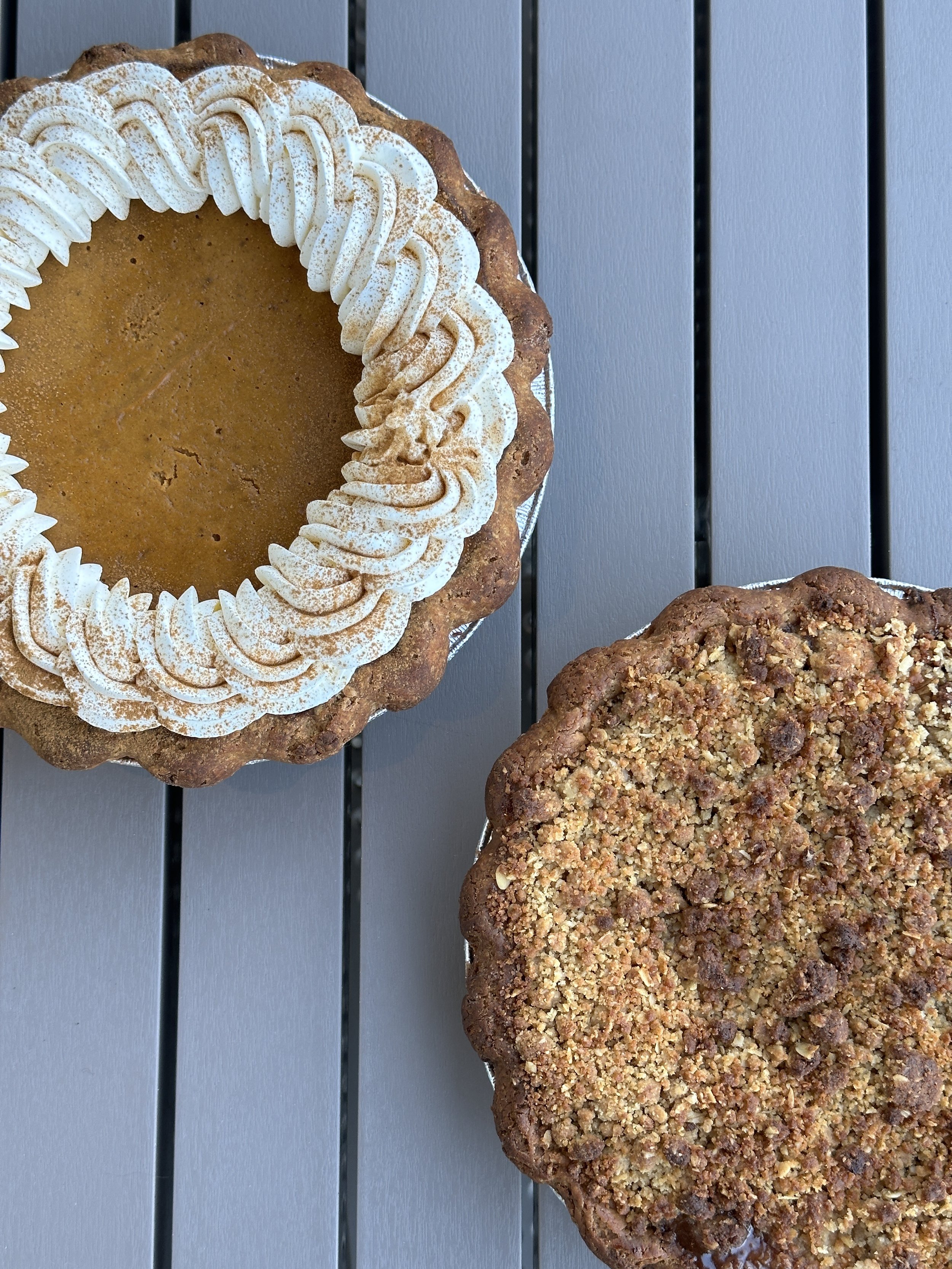
We may be down to the wire with Thanksgiving prep, but you still have time to make pie!
First, to everyone who came out and stood in line for pie today, THANK YOU. I truly appreciate you. And if you weren't able to get a pie, I'm so sorry. My team and I are doing the most we can, the best we can, with our small space, two ovens and only so many hours in the day.
So, as a little gift and thank you from me to you, here's my pie dough recipe.
I started baking pies with my grandma when I was a wee thing. She taught me all her secrets for a flaky, buttery dough. Years later, at Gotham Bar and Grill, I learned the trick to a really tender crust: a splash of vinegar. Even though it’s mainly used as a tenderizer in traditional flour crusts (and clearly there’s no gluten in this dough), I still carry over this lesson because a splash of acid keeps the dough from turning gray and it adds a little brightness that balances the richness of the butter.
This is my tried-and-trusted pie dough, the one I use for pies all year round. It's made with WLDFLR Pastry Flour, frozen butter, and three quick folds. It’s super easy and bakes up golden, tender and FLAKY.
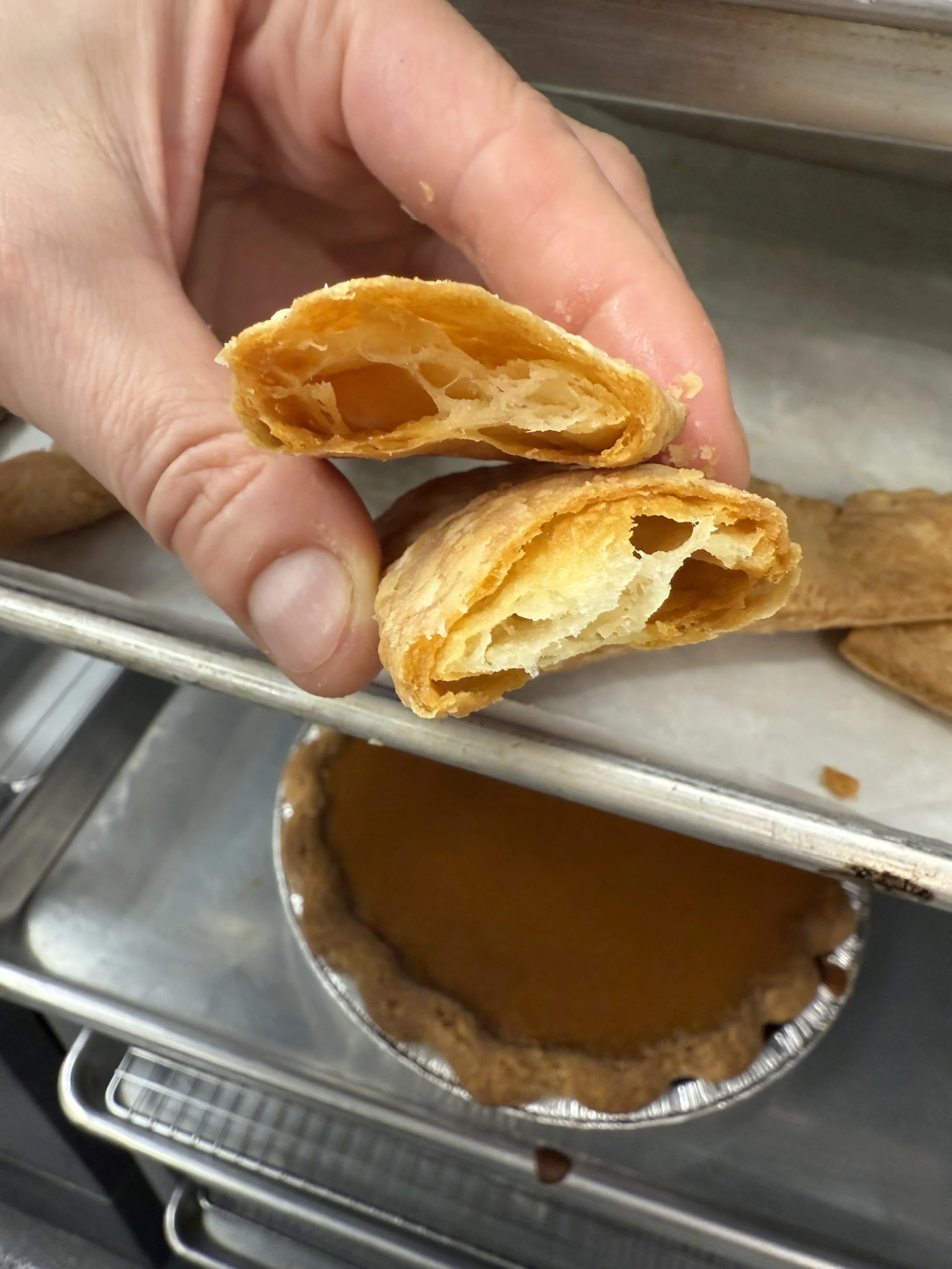
WhAT MAKES THIS Dough FlaKY
Gluten-free pie crust has a reputation for being sandy, crumbly, dense, or cardboard-y. But it doesn't have to be. Flakiness comes down to butter and technique, and you can control both.
Frozen butter. Cold butter stays in distinct pieces. In the oven, those pieces melt creating pockets of steam, and that's what lifts the dough into layers.
Press don't rub. Cut your butter into small cubes or rectangles. Flatten the butter between your fingers into thin sheets instead of rubbing it into crumbs. Sheets of butter make flakes when they melt and steam in the oven.
Crumbly is correct. After the water goes in, the dough will still look dry and shaggy. Stop there. You'll bring it together on the counter.
Three letter folds. This is the pastry-chef move. Folding the dough like a letter stacks those butter sheets into lots of layers, the same idea as puff pastry, just quicker.
Rest it. At least 30 minutes in the fridge lets the flour hydrate and the butter firm back up, so the dough rolls out smooth. The butter has to stay cold to stay in layers, and those layers are your flakes.
WLDFLR Pastry Flour. I created this blend for exactly this kind of baking: tender, buttery pastry that tastes just as good as the original.
Think you’re short on time? It needs just 30 minutes in the fridge! While it’s a little late to make ahead for this Thanksgiving, it can certainly be made ahead of time in the future!
Now Go Make Pie!
This dough is your blank canvas. It’s perfect for sweet or savory applications and is the pie dough I make all year round. One batch gives you two single crusts or one double crust, so it covers just about any pie:
Custard and cream pies (pumpkin, sweet potato, chocolate cream): freeze and blind bake the crust first so the bottom stays crisp under the filling
Fruit pies (apple, rhubarb, cherry, summer berries): use both rounds for a double crust or cut the top into a lattice
Crumble-topped pies: one bottom crust plus your favorite streusel (apple crumble is my fave!)
Savory pies and quiche: there's no sugar in the dough, so it works beautifully for pot pies and quiche too!
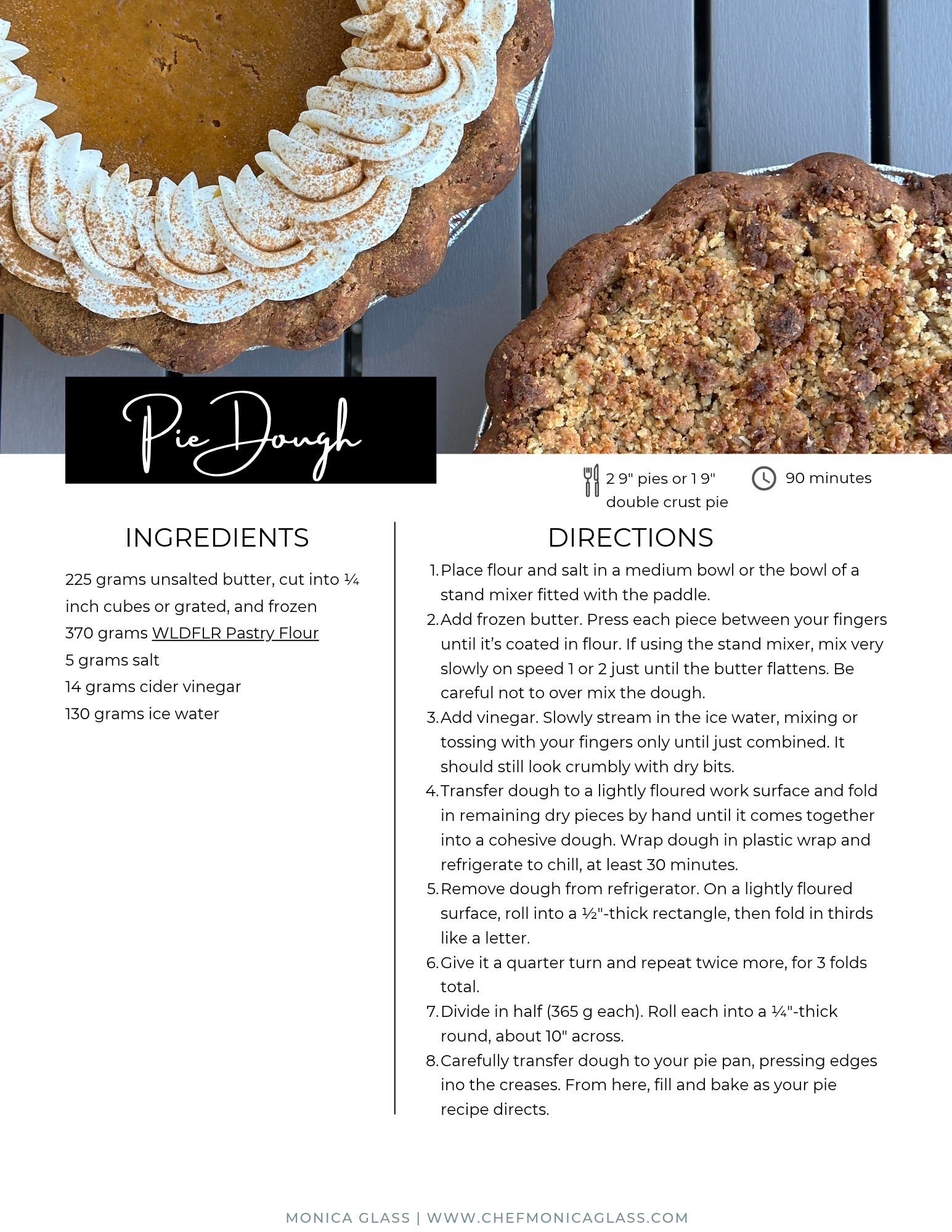
Tips From My Kitchen
Can I grate the butter instead of cubing it? Yes! You can absolutely grate it straight from the freezer for the fastest route to thin butter pieces. This method is best when mixing by hand since you want to work quickly before the butter softens. Keep in mind that your dough will be more tender and even crumb over flaky layers since there won’t be larger pockets of butter. Both will still be delicious though!
My dough looks too dry. Should I add more water? Probably not. It's supposed to look crumbly at first. The folds on the counter bring it together. If it truly won't hold when you squeeze a handful, add ice water a teaspoon at a time.
The dough cracked when I rolled it. Let it sit at room temperature for a few minutes, then patch it. Gluten-free dough is forgiving: press the crack closed with your fingers and keep rolling.
Can I make it ahead? Yes, and I recommend it anytime you have extra time! Wrap the dough tightly and keep it in the fridge for up to 3 days or freeze it for up to 3 months. Thaw frozen dough overnight in the fridge before rolling.
Why the vinegar? It's the trick I learned at Gotham Bar and Grill for a really tender crust. A splash of acid keeps the dough from turning gray in the fridge, and it adds a little brightness that balances all that butter. Don't skip it!
I like a thicker crust. Can I make it thicker? Yes! For the thicker crust like we make for our pies at Verveine, make the recipe 1 1/3 times: 481 g WLDFLR Pastry Flour, 293 g butter, 6.5 g salt, 18 g cider vinegar and 169 g ice water. Divide it in half (about 474 g each) and roll as usual.
Next up on the Journal: the pumpkin pie I'm filling it with this Thanksgiving. Stay tuned!
Watch me make this dough step by step on Instagram @chefmoni, and grab WLDFLR Pastry Flour in the shop. If you bake it, tag me. I want to see those flaky layers!
With love + flour,
Monica
EQUIPMENT:


